
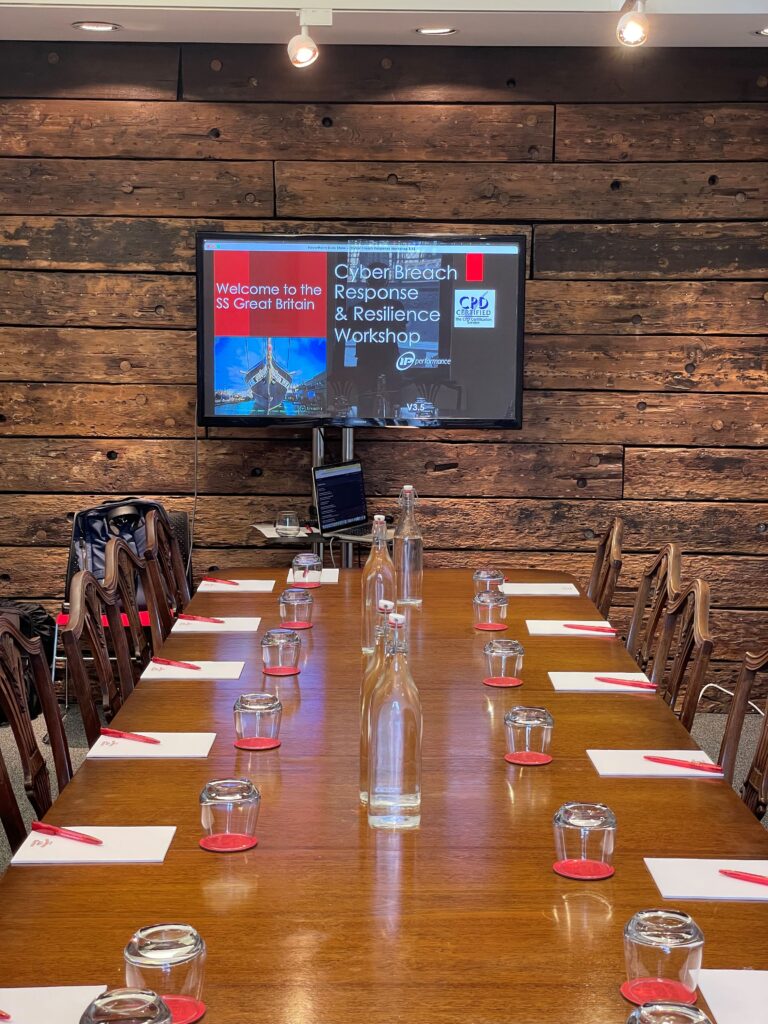
What happens when a CEO, a CISO, a business owner, and a Tier 1 analyst walk into a simulated cyber-attack? That’s exactly what we found out at our Cyber Breach and Resilience Workshop, held aboard Bristol’s legendary SS Great Britain.
It was a full house, with delegates from across industry sectors. But once the cyber breach simulation began, titles faded fast. The room came alive with debate: Should the board “go public” early, or should the technical team investigate quietly first? Voices rose, ideas clashed, and people leaned in. It was exactly the kind of pressure you only feel when it really matters.
That moment summed up the heart of the workshop – understanding that a cyber breach isn’t just an IT issue. It’s an organisational crisis that tests leadership, communication, and readiness.
Throughout the day, delegates swapped stories from their own organisations, what’s worked, what hasn’t, and how they’ve built playbooks to manage different types of incidents. The conversations were candid and collaborative, and there was a real sense of learning together rather than being “taught.”
By the end of the day, one takeaway stood out: resilience is about mindset. It’s not if a breach happens, but when. Being prepared whether it be strong passwords, MFA, monitoring, and clear response plans or just understanding the risks makes all the difference. Or as one attendee put it, “You can’t find what’s wrong if you don’t know what normal looks like.”
Throughout an intense day of decision-making and strategy, delegates got a chance to unwind with a tour of the SS Great Britain, a fitting backdrop for a day about resilience and innovation.
The feedback was overwhelmingly positive, and with such energy in the room, we’re already planning our next Cyber Breach and Resilience Workshop for the new year.
Because in the end, the more we talk, share, and prepare the stronger we all become.